In the seat:
- Bhavna
- Scott
- Kylie
Recorded 04/04/12 on a bus
Podcast: Play in new window | Download
Subscribe: Apple Podcasts | RSS
In the seat:
Podcast: Play in new window | Download
Subscribe: Apple Podcasts | RSS
Congrats to the solo 25 for the week, Father Beast.
Thanks to Tad for the voice mail this week.
Podcast: Play in new window | Download
Subscribe: Apple Podcasts | RSS
Part 3 of our 5 part Rock ‘n Roll series
Release date: 11/9/1998
Miramax Films
Directed by
Produced by
Written by
Cast
Ewan McGregor
Jonathan Rhys Meyers
Christian Bale
Toni Collette
Eddie Izzard
Initial comments by the hosts:
Darrell isn’t a big fan of “flash-back” story telling but he liked this movie and thought it offered a nice little history of glam rock. Jill loved it, thought it had a lot of layers but didn’t see it as a historical piece. She looked at it not to look back at history but to look forward to where we are now. David thought he would hate it, but he really enjoyed it because it wasn’t about the music itself, it was about the human interaction. Tony liked all the pieces of the movie but wasn’t blown away by it as a whole. He thought that acting, the music and the visuals were great. Jill, being a big David Bowie fan, said she constantly finds new references every time she goes back to watch this movie again.
The hosts get into an interesting discussion regarding whether culture today embraces the different musicians/styles/visuals the way that Britain did in the early 1970s, and specifically whether America did versus the way Britain adapted to that style. They also agreed that the movie is more about Arthur’s (Christian Bale) character than either of the musicians.
Jill liked how the music was used to push the narrative along with abstract music video pieces, performance pieces and soundtrack pieces. It was also impressive that both Ewan McGregor and Jonathan Rhys Meyers both sang for this movie.
Tony brought up that he found the story line very similar to Eddie & The Cruisers in that the lead character faked his death and a reporter tries to figure out what really happened, but the similarity pretty much ends there. The story itself is more about the reporter trying to figure out who he is, his experiences, and how he related to that movement.
David appreciated that this movie tackled relationships not in a childish way, which he tends to see in music-themed movies, but in a more realistic way that shows relationships as “complicated, messy, and broken.”
It was agreed that all of the acting was outstanding, with extra kudos to Eddie Izzard for stealing every scene he was in.
David brought up the question of whether music played an integral part in your development as a person. Jill emphatically said “yes” and followed it up by saying that this movie is an indictment of the United States in that the cultural references die away in this country, more so than others. David stated that, which he has specific memories tied to some music, he doesn’t have any emotional connections to music. Jill found that this movie resonated with her in that you can be an “alien” and find a world of other aliens/alienated people, through music. David would have been perfectly fine if this movie had removed the soundtrack because the human narrative spoke more to him than the music did.
The parallel of podcasting is brought up, and both Tony and David talk about how podcasting (though not necessarily in the genre of movie reviews) is an essential part of their lives at this point. The friendships that have been gained over the years through this shared forum are often closer and/or stronger than friendships gained through childhood.
It was brought up that there were a lot of critical complaints about this movie that there was no real completion to the story lines. The hosts disagreed with those complaints; arguing that there were, in fact, completed story lines (What happened to Brian Slade?) and also arguing that there didn’t need to be a completion regarding Arthur Stuart’s character. You don’t know what will happen next with him, you just know that he will move on, move forward, and he’ll be fine.
Jill asked about the similarities between this movie and last week’s movie, Almost Famous. Tony correlated Russell Hammond and Stillwater to Curt Wild. One is about being the musician that they want to be and the other is about striving to be an iconic figure/performer that the fans will adore. Jeff Bebe (Jason Lee, Almost Famous) is the one who wants to be an icon, while Hammond just wants to play his music.
A few trivia bits and pieces:
Jonathan Rhys Meyers and Ewan McGregor sang their own songs, but a few of Rhys Meyers’ songs were overdubbed by Thom Yorke (Radiohead).
A great deal of the dialogue stems from the writings of Oscar Wilde.
The name of Brian Slade’s persona, “Maxwell Demon,” and his band, “The Venus In Furs”, are references to two of glam rock’s biggest artists: Maxwell Demon was the name of a band in which Brian Eno performed in England in the 1960s, and “Venus In Furs” is a Lou Reed and The Velvet Underground song. Both artists are on this film’s soundtrack.
Curt Wild’s character is largely inspired by David Bowie’s relationships with Iggy Pop and Lou Reed. Iggy Pop hailed from Michigan and, for a time, had long blond locks, while Reed was forced to undergo shock therapy for bisexuality as a teen and was also rumored to have had an affair with Bowie before their later falling out.
When Brian first sees Mandy, he asks “Do you jive?” This is what David Bowie reportedly said when he first saw his future first wife, Angela Bowie.
During the scene where we’re first introduced to Curt Wild’s character, during the Festival scene, Ewan McGregor was only supposed to moon the audience. He had been so inspired by Iggy Pop that he improvised and dropped his pants to his ankles and began to jump around the stage.
Your Producers for this episode were:
This episode was recorded: 4/11/2012
Podcast: Play in new window | Download
Subscribe: Apple Podcasts | RSS
In the seat:
Podcast: Play in new window | Download
Subscribe: Apple Podcasts | RSS
Note: I outright stole this from Tee’s blog. Tee is awesome. Read his blog.
The original is posted here.
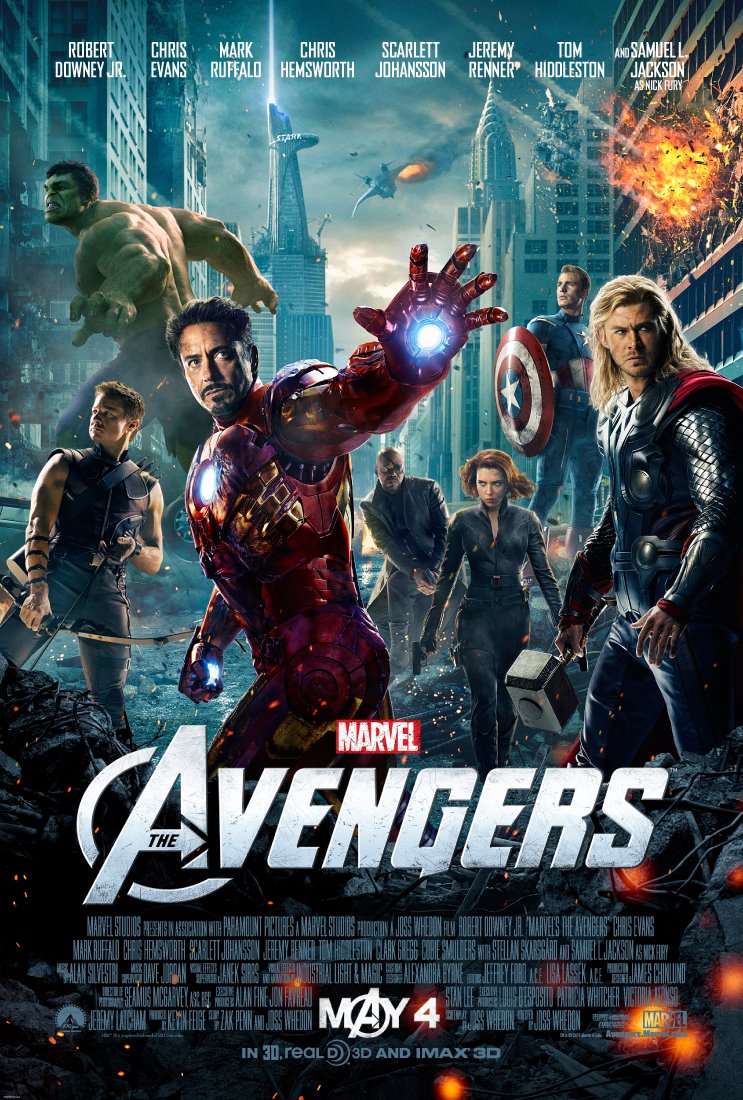 Since 3 a.m. last night, I have been singing the praises of The Avengers, the über-anticipated epic directed by one of the deities of fanbois everywhere Joss Wheedon. Now while this may make me sound like I’m looking down my nose at fanbois and geeks, I disagree — I’m just practicing full transparency, just as I practice in my life a blatant display of geekiness. It’s part of my job. It’s part of my life. I have no shame being a geek. It’s who I am.
This morning (as in the midnight showing) Pip and I saw what I would argue is Joss Whedon’s second-best film (still not as shiny as his best) but his greatest triumph as a screenwriter and filmmaker. Whedon took four of Marvel’s heaviest hitters, threw in three more for good measure, shook well, and created a script and a movie that was balanced, entertaining, and good fun. And when I say fun, I mean “original Iron Man” fun. Already on IMDB and Rotten Tomatoes, the reviews are coming in and the movie will, as summer blockbusters do, raise the bar for other movies of its ilk…
I will go on to say, though, if Battleship breaks The Avengers records, I am seriously going to wrap up this blog and hide. For a decade.
There was, though, one venue that did not care for The Avengers: The New York Times. Perhaps the one voice against the film would have gone unnoticed had Samuel L. Jackson not channeled co-star Mark Ruffalo’s Hulk and gone on a Twitter rant.
The backlash, some of which I admit to piling on to, comes across as fanboi rage. It would be just one more incident of fanboi rage that makes geeks look like idiots playing World of Warcraft in the basement of their home, but what makes this fanboi rage different is Samuel L.M.F. Jackson (and you know what the MF stands for…) leading the charge. But why? It’s just a sole negative review, right, amongst a tsunami of positive ones, right?
I can’t speak for Nick Fury but I can speak for myself, and when I did on my Facebook page, comments continued to prod at my (apparent) opinion of theNew York Times review, the summer blockbuster, and how this movie really won’t in the long run further anything in the genre other than Joss Whedon.
Instead of ranting on Facebook, I decided to bring my rant here. Why? Because I feel the need to explain myself…again.
My own stand against the New York Times review is not because (gasp!) they didn’t like The Avengers, because there will be Marvel fans who will refuse to go mainstream and simply protest for protest’s sake. I take more umbrage in theTimes’ apparent disdain for the genre on the whole. Admittedly, the review could have been a lot worse, but it does come across a bit condescending. For example…
“The light, amusing bits cannot overcome the grinding, hectic emptiness, the bloated cynicism that is less a shortcoming of this particular film than a feature of the genre.”
This was the point of the review that made me blink, but not as bad as…
“The price of entertainment is obedience.”
Hold on — was the New York Times review telling me I was being manipulated to enjoy this film? “Obey — as this is a summer blockbuster…” or some such?
At this point, I was reminded of another review from the Times…
“The true perversion, though, is the sense you get that all of this illicitness has been tossed in as a little something for the ladies, out of a justifiable fear, perhaps, that no woman alive would watch otherwise. While I do not doubt that there are women in the world who read books like Mr. Martin’s, I can honestly say that I have never met a single woman who has stood up in indignation at her book club and refused to read the latest from Lorrie Moore unless everyone agreed to The Hobbit first. Game of Thrones is boy fiction patronizingly turned out to reach the population’s other half.”
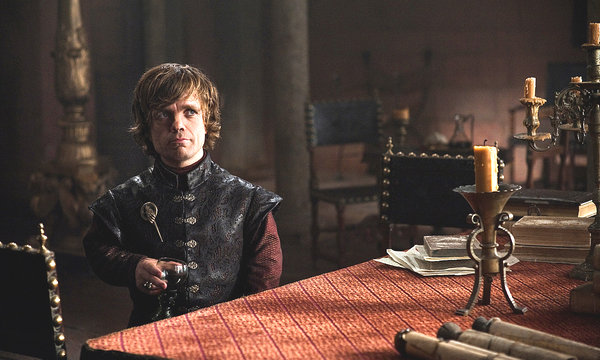 I have grown tired — very tired — of how Science Fiction and Fantasy is regarded as the red-headed stepchild of storytelling genres, and regardless of accomplishments like Game of Thrones or The Avengers, the NYT has fed into that with ongoing commentary, which I found to be a shallow look at what is a complex, well-written series. The snide remarks about The Avengers, a movie that was a real gamble no matter how you look at it…
And yes, before I get the pile-on about the formulaic summer blockbuster with all the pretty people in the leads, The Avengers was a gamble because Marvel started up the hype four years ago. This movie could have been a steaming turd ala Green Lantern because —Whedonites, prepare your own retaliations now — Joss Whedon isn’t perfect. Dollhouse, for me, was proof of that.
Whedon was given a challenge and he surpassed it. Four years of hype, of buildup, of expectation, all fell into place with this film; but leave it to the New York Times — just as they did with Game of Thrones — to pretend that the argument is invalid, and it’s just more of that Science Fiction and Fantasy crap, designed to appeal to the gamer crowds exclusively.
Perhaps I’m snapping in light of things like people who claim “Oh I don’t read that science fiction stuff, that’s just not my thing…” while they say only a moment later “Oh yeah, I’m reading The Hunger Games on my Kindle right now…” A great comeback to “That sci-fi stuff is too weird for me…” is “Really? What was the last title you tried reading?” To date, only one person has ever come back to me with an answer to that — it was Lani Tupu and the book wasStranger in a Strange Land.
Good on ya, Lani.
My ire is not against the Times’ review. It’s the Times’ attitude about Science Fiction and Fantasy being beneath them. There’s a lot more to this genre than death rays, swords, and magic. When done right, it is about people and the extraordinary challenges they face; and if we are really given a terrific story with amazing characters, it is how we can learn from their struggles and face our own. The NYT critics apparently do not see it in that same light, and as they fail to understand it simply think it’s tiresome.

And to my friends on Facebook who drove me here, no, I’m not angry on you disagreeing with me. That’s not my style. I was growing punchy in my own failure to make clear what I was reacting to. Disagree with me all you want, so long as we’re having the same debate. Right?
Maybe it’s sleep depravation and not fanboi rage that is currently driving me. I’ll take a nap. Let you know how I feel tomorrow…
Picks:
Tony and Andrew:
Jonathan:
Podcast: Play in new window | Download
Subscribe: Apple Podcasts | RSS
Thanks to Tad for the voice mail.
Congrats to Tony, BD and Andrew… who all scored higher than 13. OUCH!
Podcast: Play in new window | Download
Subscribe: Apple Podcasts | RSS
Part 2 of our 5 part Rock ‘n Roll series
Release date: 9/15/2000
DreamWorks and Columbia Pictures
Directed and Written by Cameron Crowe
Produced by Cameron Crowe
Cast
Billy Crudup Russell Hammond
Patrick Fugit
Frances McDormand Elaine Miller
Kate Hudson
Jason Lee
Initial comments by the hosts:
Before discussion of the movie began, the hosts talked about how difficult it was to find Almost Famous in streaming form. It’s available for rental, and even that is limited, and the movie is also broken up into 12 parts on You Tube.
This is a semi-autobiographical movie of how Cameron Crowe got his start and you really get the sense that this movie feels a biopic, even though it’s a fictional story. Darrell points out that there are lots of little inside jokes in the movie (some of these will be listed at the end of the notes). Darrell thought it was funny that, only in the 1970’s, could a 14 year-old boy get a job with Rolling Stone Magazine, go on tour with a band and his mother does NOT completely freak out over this.
Lena (from the chat room – watcher of the You Tube version) noted that it was nice to be reminded that Kate Hudson is actually talented.
Tony thought Frances McDormand was fantastic; her character was a force in this movie. He also was impressed with the acting talent throughout the movie, not only of the main stars but also of the background/secondary characters, such as Fairuza Balk and Anna Paquin (The Band Aids), Zooey Deschanel, Jimmy Fallon, and Phillip Seymour Hoffman, to name just a few. Every character had a distinct voice and Crowe did a very good job at capturing and realizing these different people.
Billy Crudup did a very good job at portraying Russell Hammond, the lead guitarist of Stillwater, who struggles through his ascent from musician in an up and coming band to a Rock God.
Two of the favorite “quirks” of controlling single mom Elaine Miller (McDormand) was her referring to Simon and Garfunkel as the devil’s music and her making her kids celebrate Christmas in September, “when it’s not commercial.”
Jason Lee was good at portraying Jeff Bebe as the leader of Stillwater, both insecure and someone who knows what to look for, what can (and eventually does) cause a rift in the band.
Patrick Fugit, as William (Billy) Miller, was able to capture the innocence of a teenager in the 70s, the excitement of a fan travelling with a band and the eye-opening breaking through from adolescence to adulthood as he begins to see what life is really like outside of the world his mother created for him.
The critical scene, near the end of the movie, shows not only the band members crumbling under the threat of their plane crashing, but also Billy Miller’s transformation from boy to man when he confronts the band about how they treat their fans… specifically their biggest fan, Penny Lane (Kate Hudson).
Trivia notes for this movie (this is only a small selection):
This film was Cameron Crowe’s semi-autobiographical account of life as a young Rolling Stone reporter. The actual group that Crowe first toured with was The Allman Brothers Band (Gregg Allman kept asking him if he was a narc). The near-fatal plane crash happened while traveling with The Who, and the character of Russell Hammond is based on Glenn Frey (Eagles).
The roles of Russell Hammond and Penny Lane were originally offered to Brad Pitt and Sarah Polley. Polley dropped out to work on her own project, and Pitt worked with Crowe for months before finally admitting, according to Crowe, “I just don’t get it enough to do it.” Kate Hudson, who took over the role of Penny Lane, had been originally cast as William’s sister.
Crowe wrote the liner notes (at age 18) to the “Frampton Comes Alive!”, and Peter Frampton returned the favor by acting as a music consultant for the film.
Frampton taught Billy Crudup how to play the guitar for the concert scenes.
Stillwater’s songs were written by Frampton, Crowe and Nancy Wilson (Crowe’s wife and member of the band Heart). This was mentioned early in the credits, although the music acknowledgments credit Russell Hammond and Stillwater as if they were real authors/performers.
Mike McCready (Pearl Jam) provided the guitar track for Stillwater’s songs.
Not only did Patrick Fugit’s voice break during filming, but he also grew three inches, forcing Billy Crudup to wear platform shoes.
Your Producers for this episode were:
This episode was recorded: 4/4/2012
Note: Six years ago today, we released the first episode of Fanboy Smackdown… which became Back Seat Producers. Thanks for 6 great years. Let’s ROCK!
Podcast: Play in new window | Download
Subscribe: Apple Podcasts | RSS
Picks:
Andrew:
Jonathan:
Safe is also in wide release this weekend.
Podcast: Play in new window | Download
Subscribe: Apple Podcasts | RSS